Infrastructures within infrastructure
Accident becomes idea becomes technology becomes infrastructure becomes ecology.
Spatial Waste
This is a story grappling with big definitions—culture and its infrastructures—as they touch ground and take form in small ways, in one backstreet of one neighborhood in London. Like all stories about the connections between things, it is one without a clear beginning or end, in time or in space. But if we must choose a moment to start, then it is with the invention of the steam engine and its use for rail transport. And if we take our present moment as the end, then the conclusion of the story lies in the ways different ecologies of productive activity have found and made different kinds of space within one railway structure in Elephant and Castle, in London, in 2019. The story is about the way one kind of infrastructure creates the conditions within which others can grow, and how the same infrastructures can produce very different outcomes, depending upon who is using them.
We are talking here about cultural infrastructure: not a specific set of things, but an approach to urban planning focused on supporting the cultural life of the city. Of course, defining culture is fraught with problems. Spatial and economic development strategies for cities are often driven by predefined ideas about what culture should be—creative districts full of galleries, shops, cafés, and global cultural institutions that resemble one another the world over. The point of this story is to show that an infrastructural approach could provide the enabling conditions for culture’s production, without needing to predefine what culture is. The moral of this story, if there can be one, is that an infrastructural approach means always looking underneath, behind, and around in order to find out what makes things work.
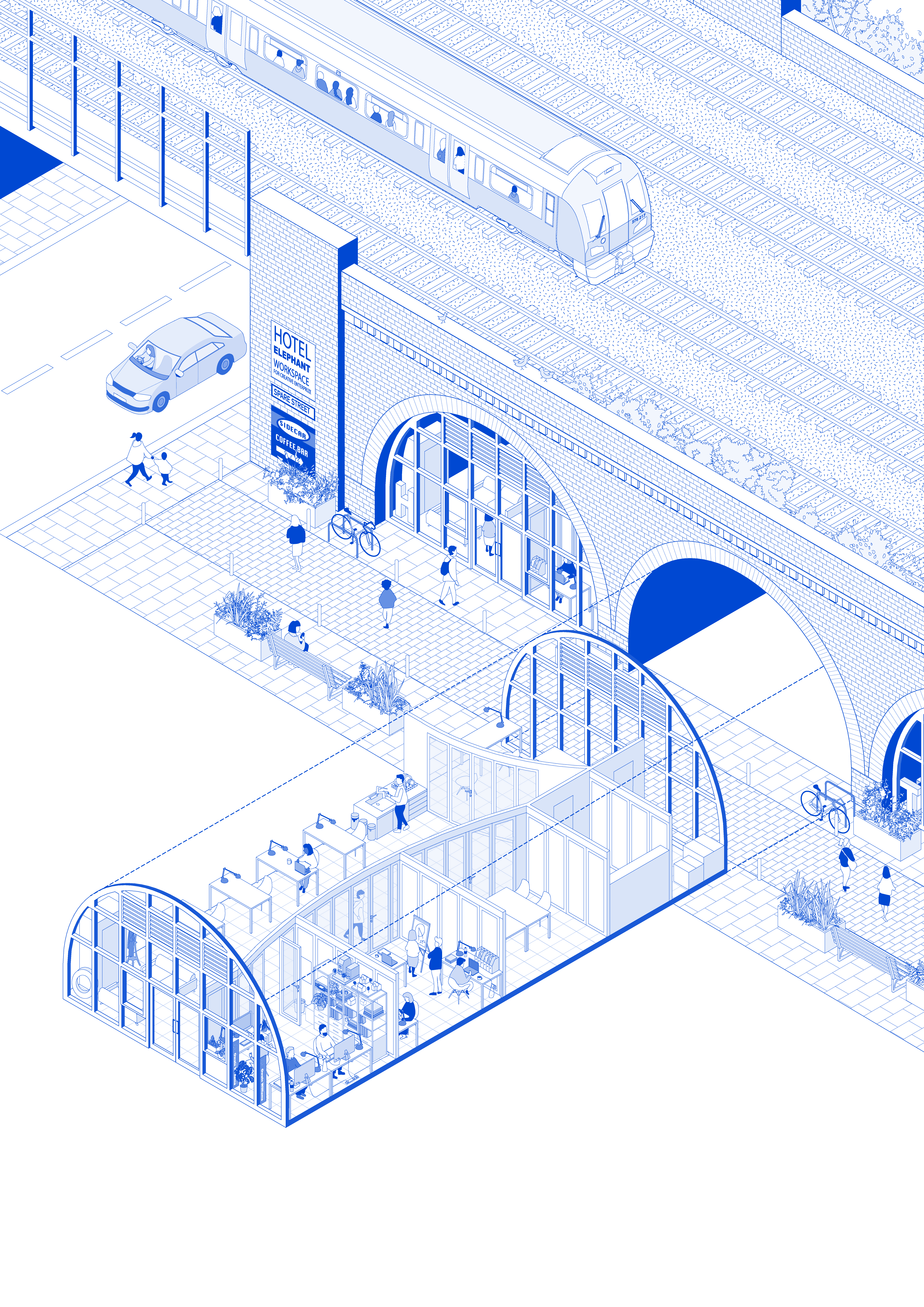
We’ll start at our chosen beginning, setting the scene before the characters come to the stage, by providing the historical infrastructure for the current plot. In the first half of the nineteenth century, a new technology—the steam-powered water pump—was adapted and condensed so that it could be incorporated into passenger vehicles. A new era of transport was thus opened up—steam trains made it possible to commute to London from surrounding settlements and back again in a day. The second half of the nineteenth century saw a surge of railway construction in London. On the north bank of the river Thames, rail lines were sunk just below the street, in a method known as “cut and cover” and leading later to what we now know as the London Underground. But in south London, where our story plays out, marshy land necessitated a different kind of infrastructure from the semi-buried railway lines. A combination of technology (the steam engine), sociology (the growing professional middle class), and topography (south London’s soft ground) led to a new typology: the railway arch. Now, it is estimated, some 10,000 arches crisscross Greater London. They were an infrastructure for a new kind of transport and a new way of living in the metropolis, one whose form was born purely from the load-spreading nature of the curve of the arch.
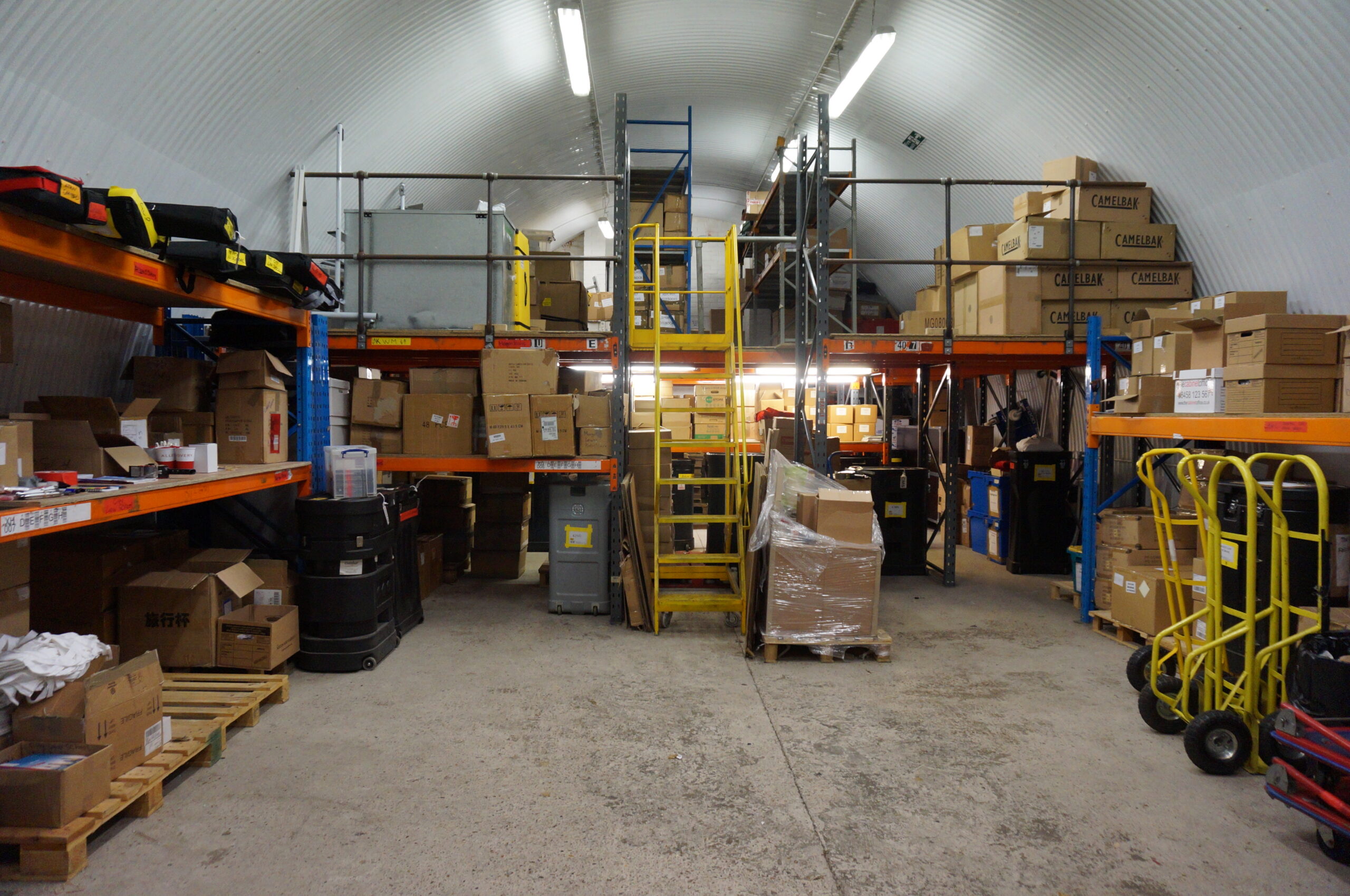
The function of the arches was infrastructural—keeping trains and tracks safely up overhead—but within them was created a new kind of architectural space, whose usefulness was not immediately clear. Some owners tried to fill them with housing, but quickly gave up because of the noise, pollution, and vibration. As the countryside around London urbanized along the new railways, the emerging urban fabric literally turned its back on them—residential and commercial buildings faced onto streets, with as much distance as possible from the railways that formed part of the “backstage” functioning of the city rather than its visual, symbolic economy. Marginal spaces, the arches were progressively used in the late nineteenth century and throughout the twentieth century for light industry, “dirty” and “low-class” trades businesses: in other words, the arches provided an infrastructure for working-class labor. But this result was not foreseen—as argued elsewhere by my colleagues, the railway arches were a kind of “spatial waste,” exploited for this dirty work precisely because they were deemed otherwise unusable.
Even as commercial rents increased steadily from the 1990s onwards, arches retained their “leftover” status, providing relatively cheap business spaces in gentrifying inner-city areas such as Hackney, Bermondsey, and Brixton. They continued to house productive and light industrial activities whose acoustic or olfactory side effects meant they needed distance from housing: fixing cars or bikes, cutting and welding metal, brewing or distributing beer, but also fabricating sculptures or rehearsing music. The relatively low cost—compared with other forms of commercial space like high-street shops—as well as the “usefulness” of these spaces, has meant they house arts, crafts, and industry alike, whose distinctions from one another continue to be blurred by their reliance on this shared infrastructure. However, as we come to our story’s present moment, London’s railway arches are at a juncture. No longer deemed “undesirable” or “leftover,” they have become part of the visual iconography of the city, and sought after by galleries, shops, and restaurants. The arches represent a well-worn narrative: leftover space becomes noticed by artists and makers, leading to its recognition by local authorities—and commercial developers—as a valuable asset in place-branding.
Content redacted, see full text
Nested Infrastructures
The American sociologist Susan Star, in a transformational text for the way infrastructure is understood, argues that it does not “grow de novo” but is rather “installed on a base” and “nested” within other conditions that exist across a wide range of registers, from the material to the organizational to the political. The railway arches are a perfect illustration of this principle. One infrastructure—planned from “above”—allows others to grow within it, in different ways. If we consider each case described here as itself a cultural infrastructure installed within a transport infrastructure, then within these infrastructures are yet more infrastructures that also grow in different ways. Facades, divisions, and storage may be spatial elements that are simple in manifestation, but they are shaped complexly by economic and organizational infrastructures, some designed in advance and others thrown up in response to need. The noise of the railway becomes an acoustic infrastructure, providing an economic and sonic buffer zone around spaces for activities that might otherwise have been pushed out. As we have argued elsewhere, the sounds and smells produced within the archways of Maldonado Walk can in turn be considered “infrastructures for coping”—a sensorial basis for the maintenance of home cultures that risk being lost in migration.
The point here is that the infrastructures for culture are not just spaces, and neither are they things that can simply be provided. As we have shown, the intervention of architecture in providing cultural workspace can be counterproductive, over-specifying it for certain kinds of culture and designing out the possibility of adaptation. This realization is why we, at Theatrum Mundi, talk about making, rather than planning or designing, cultural infrastructure. Artists, craftspeople, and small-business owners do not just make culture, they also make infrastructures, ones that help maintain the conditions for a broad range of cultures to thrive in the city. The making of cultural infrastructure, we could argue, is fundamental to culture as a process—not something that happens before culture “arrives,” but an ongoing labor of the production and maintenance of social and spatial conditions for working. Which is not to say that there is no role for “design,” understood as a broad term taking in the ways architects, planners, and engineers pre-conceive a spatial system for a purpose. Some scales of infrastructure require equivalent scales of institutionalized design, like the railway and the system of planning regulation. We should think similarly about culture—rather than designing finished “spaces,” we should focus on providing the underlying structures within which individuals and small collectivities can determine the sensorial, organizational, and aesthetic infrastructures that sustain what culture means for them. In this way, design as a broad field could go beyond talking about what is and is not cultural infrastructure, and instead adopt an infrastructural approach to culture, that aims at understanding and putting in place the enabling conditions rather than foreclosing the outcome. Rather than saying “we need artists here,” an infrastructural mode of design would provide the conditions within which multiple forms of productive activity can flourish side-by-side and indeed in solidarity with one another—micro industry, small suppliers, migrant food production. The infrastructures of individual artists and craftspeople have much more to do with these conditions, ones connected by the economic and spatial scale of their labor, than they do with the spectacular architectures of contemporary cultural institutions that perform place-branding for cities on a global stage.
The Right to Infrastructure
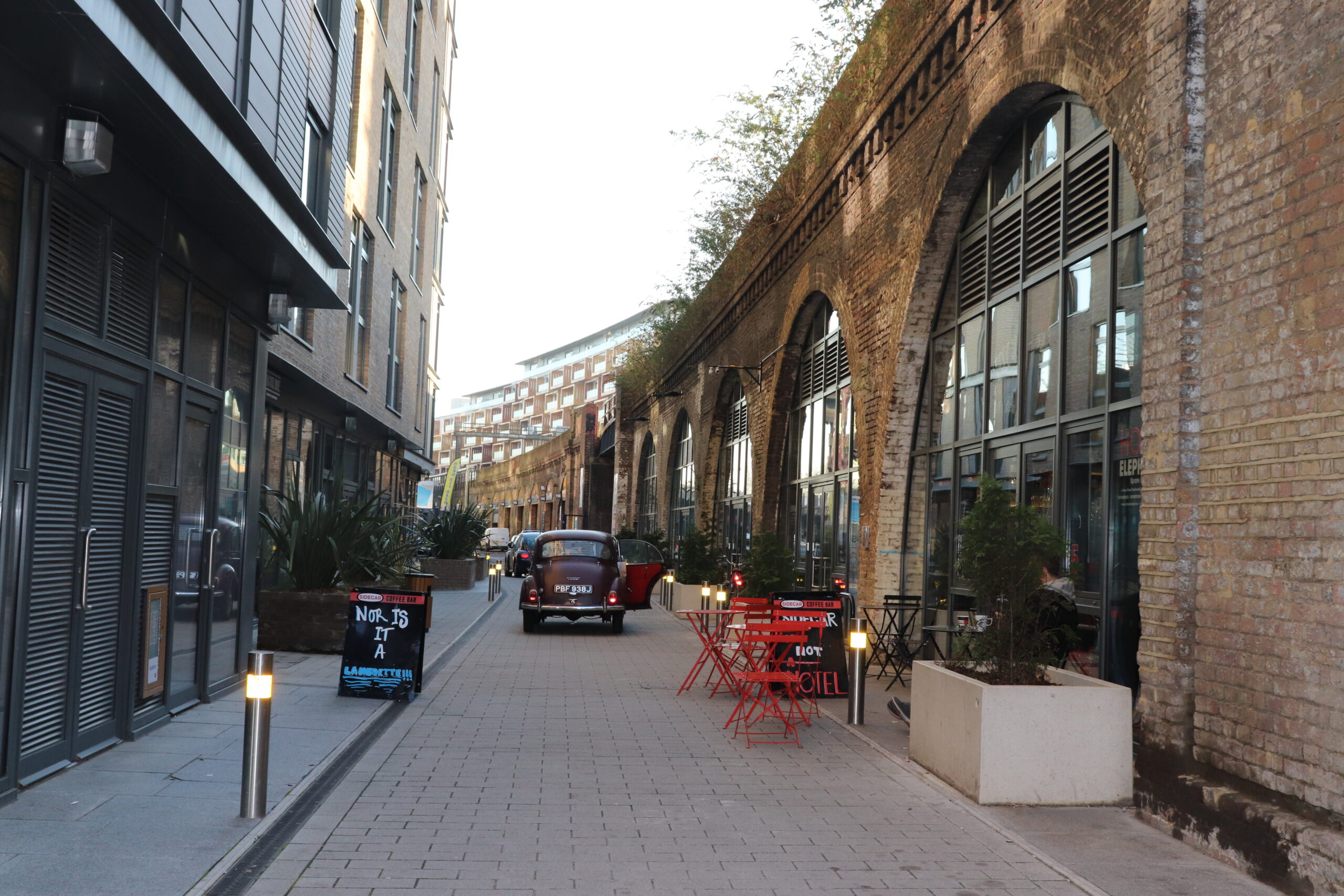
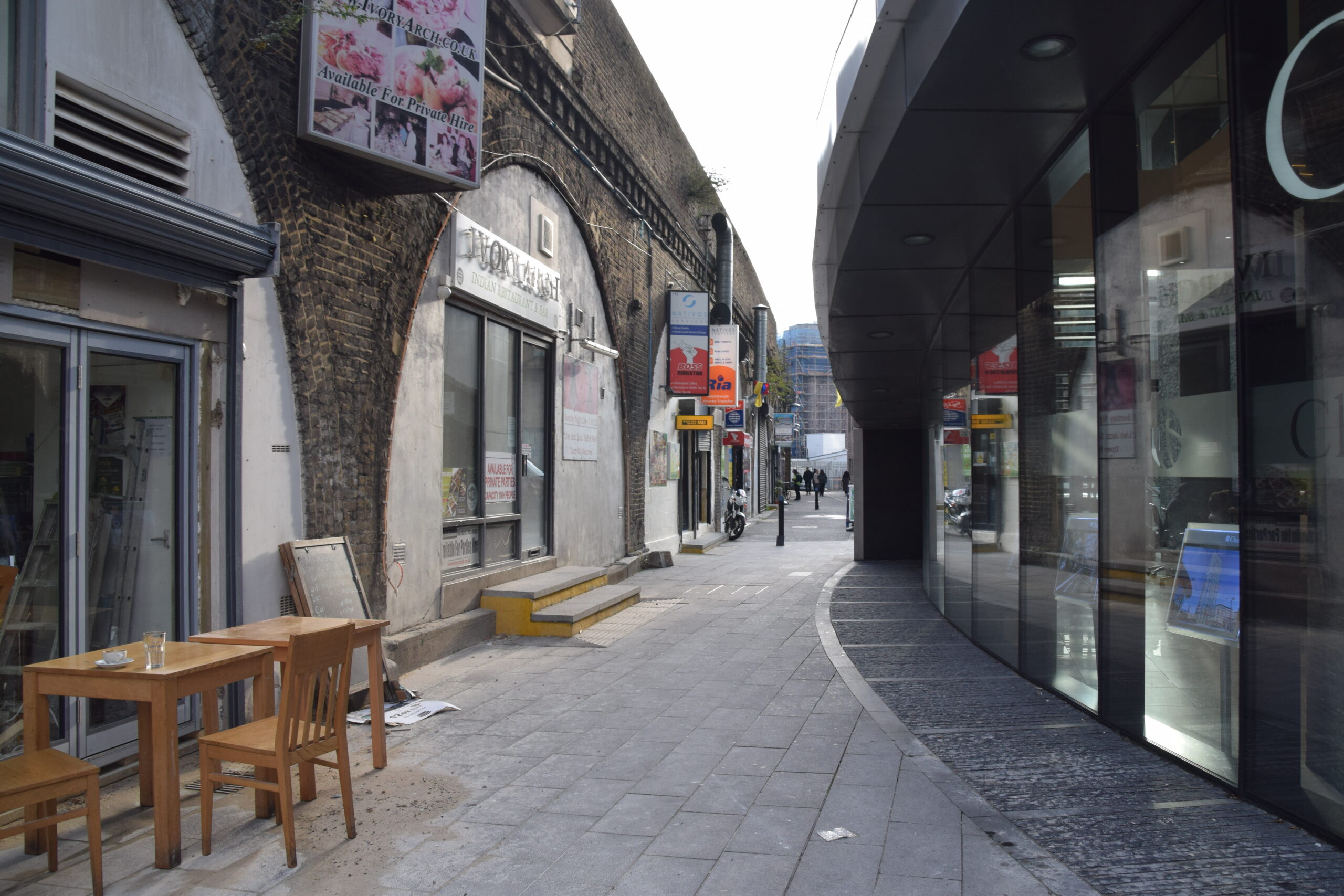
Once this connection becomes clear, cultural infrastructure reveals itself not only to be about economic opportunity or the maintenance of London’s artistic prowess. The making of infrastructures for culture should also be informed by political aims. Observing the ways that the inhabitants of Maldonado Walk, for example, have made infrastructures to sustain the production of their own culture, David Harvey’s reading of Lefebvre’s right to the city as a right to the production of culture provides an interpretive lens. When those with the least institutional power can engage in, and have agency over, cultural production, there emerges the possibility of reshaping the urban environment according to their own desires, in distinction from the corporate interests—big government as much as private business—which retain so much control over the built environment. The business owners at Maldonado Walk produce and sustain a culture as well as the material conditions that culture is based upon. By doing so, they have been part of reconfiguring this neighborhood sensorially and infrastructurally as a place of rich pan-Latin-American cultural life and forms of space. The artists and small creative businesses working on Spare Street have no such agency over their working conditions, which were designed in advance, making them easy to slip into and start “creating,” but equally easy to slip out of again without leaving a trace. So by pre-defining culture and over-designing the conditions for its production, architecture and urban planning could actually undermine the “right to infrastructure” by making inflexible spaces that stifle self-organization and self-determination. On the other hand, leaving people completely to their own devices, without support from public investment, can lead to an impoverishment of stability and material conditions that is in evidence even within the strong community on Maldonado Walk. This over-determination by design, which marks spaces with the visual symbols of “creative” industries, also creates arbitrary distinctions with “non-creative” activities like those on Robert Dashwood Way. These under-acknowledged kinds of work that are crucial to the city’s cultural ecosystem do not need, and are even keen to avoid, the kind of architectural spectacle that is characteristic of so much self-consciously-conceived “cultural” space.
What connects the characters in our story, then? They all share the need for a well-founded “base” on which to “install”—to come back to the language of Susan Star—but also a desire and an ability to forge social, material, and organizational fabrics of their own. The challenge for the broad field of urban design, then, is to provide a solid starting point but without foreclosing the end result—not so much designing for culture but rather designing for making cultural infrastructure. This intent is a political imperative, about placing not just the means of cultural production in the hands of citizens, but also placing the means of producing those means in their hands too. The railway arches created excess capacity, their existence as an unintended byproduct of transport made them cheap and flexible, and a benign neglect made them adaptable to different kinds of labor that help produce a shared cultural life in different ways. All these conditions are kinds of infrastructure that can and should be provided, and within which other kinds of infrastructure can be made for and by their users. There is also an environmental imperative in designing infrastructures in ways that mean their waste products can be taken up for re-use. This kind of design is not just about shaping the material and the visual, but also about creating the sensory, legal, and economic conditions within which the right to remake the city is guaranteed. Institutional city-makers may need to let go of control of the visual order of the city, or have it wrested from them. But they must do so without retreating from the acts of planning and design that collectivize and redistribute resources in the form of basic infrastructures and, as a consequence, allow people to forge their own ways of creating cultural forms of life. Not infrastructures for culture, then, but infrastructures for infrastructure.
Images