The Blog and the Territory
Doctoral thesis undertaken at UCL Bartlett School of Architecture, on the production of the public sphere at a hyperlocal scale through the interplay of media and the built environment.
Accounts of communication technology use in neighbourhood life tend to foreground either media or space and treat the other as a backdrop. As a result, there is much research on the way neighbourhoods become the content of media and how media could be instrumentalised to improve local communities, but there is a lack of synthesis of media and built environment research allowing a nuanced understanding of the role of communication technology in neighbourhood life.
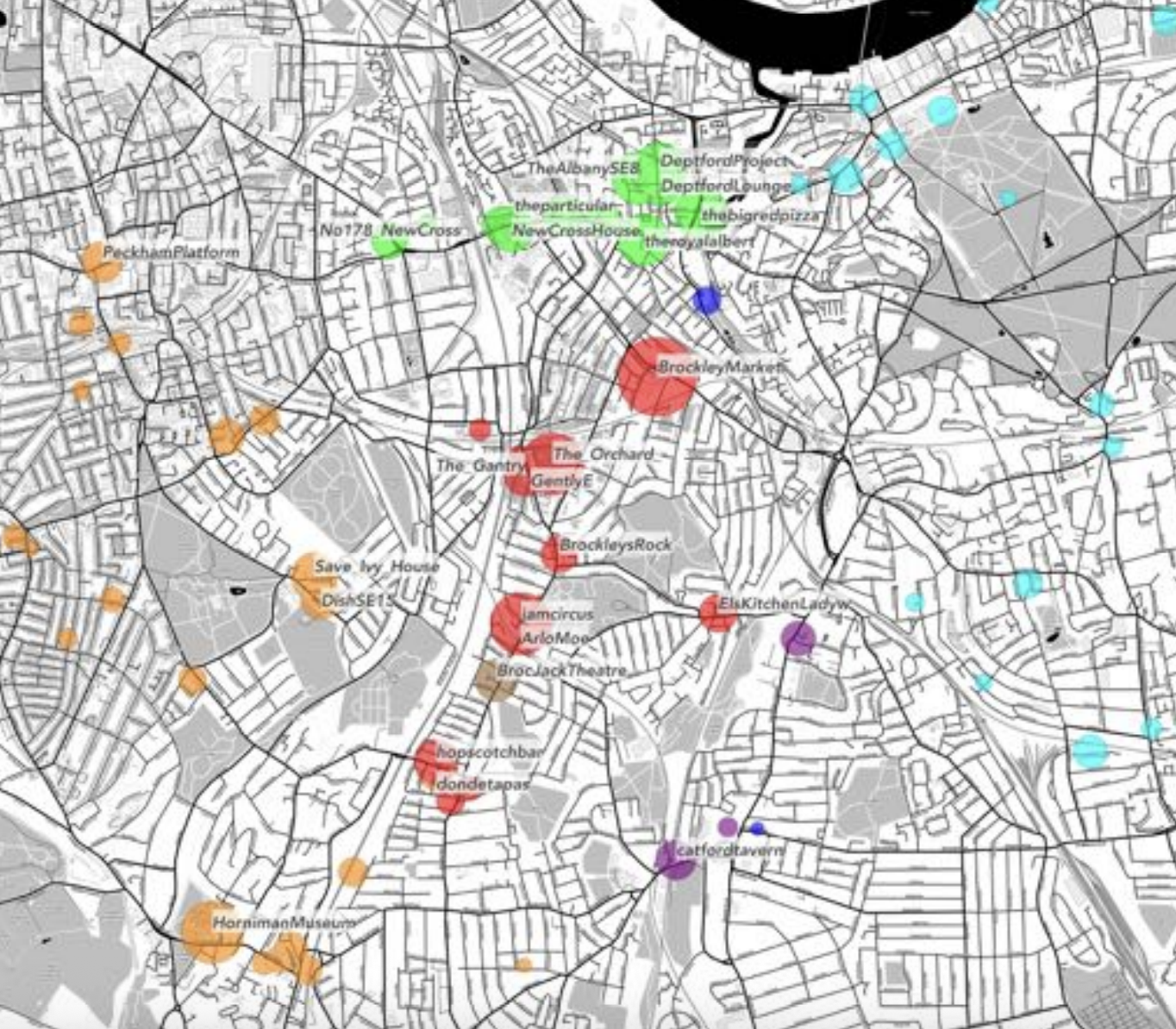
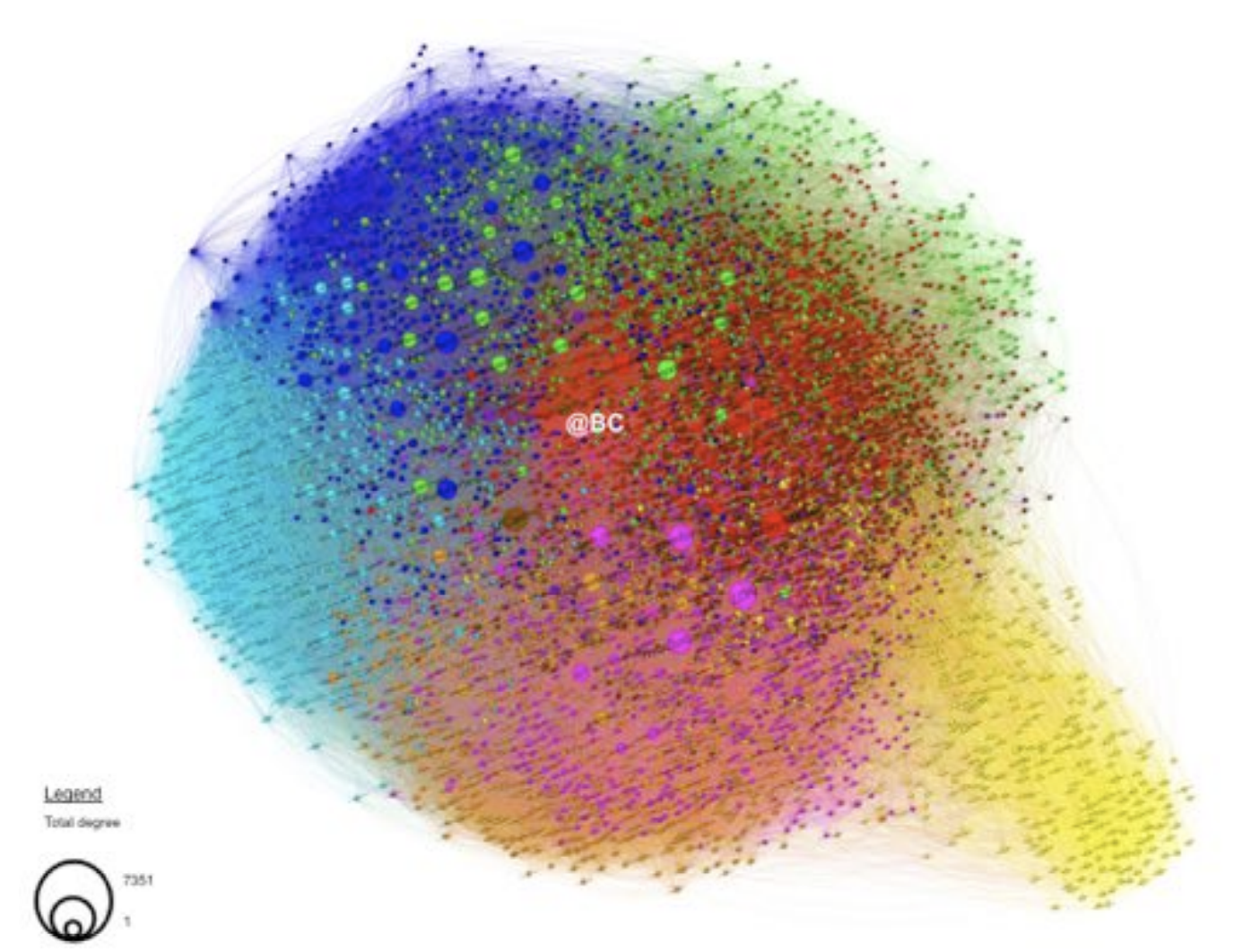
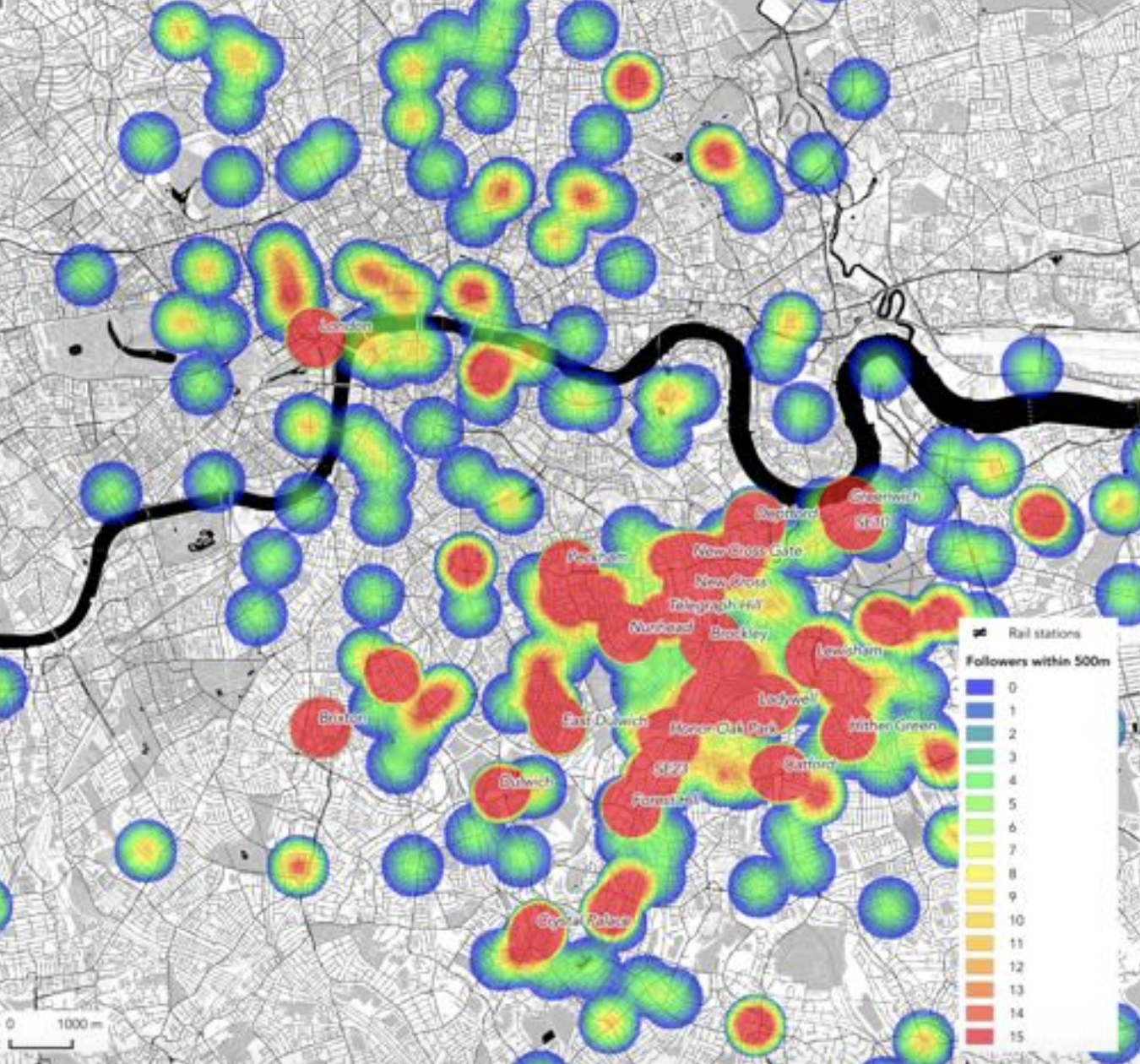
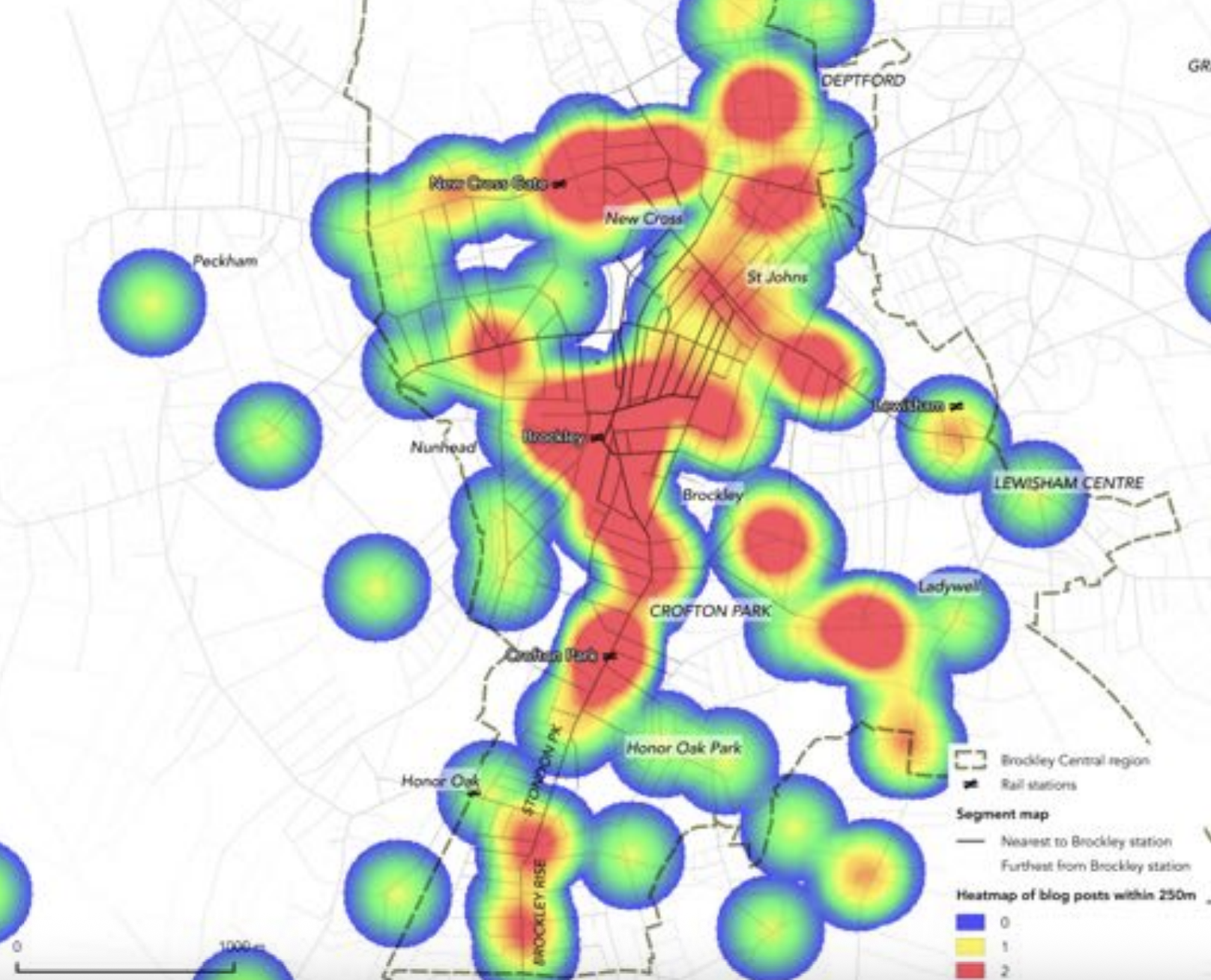
This thesis addresses this gap in knowledge by developing a richer set of interlinked concepts and methods than that which is currently available to describe urban communications. Existing theoretical frameworks are expanded upon through critical development of a number of approaches to ‘placing’ the main hyperlocal news blog for one neighbourhood: mapping the locations it discusses; analysing the geographical and network characteristics of its social media network; and the development of grounded theory about the use of media in the neighbourhood through qualitative interviews.
The main arguments hold that even at the hyperlocal scale, theories of the national public sphere can help understand the way that imaginaries of place are formed through media; that a focus on subjective imaginaries and non-instrumental storytelling enables a better description of hyperlocal media use than on its instrumental value; and that neighbourhoods should be described as communication ecologies formed of multi-modal actor-networks of people, places, and technologies, rather than as separate spatial and virtual realities. The findings are largely methodological, demonstrating the possibility of placing media by mapping the issues it frames; of illustrating links between spatial morphology and the distribution of issues and social media networks; of using qualitative data to spatialize theories of the formation of the public sphere; and a proposition for a new method for building a socio-technical interaction network demonstrating the structure of the hyperlocal communication ecology.

Images