

Beyond Green Space
Extract of an article written as part of my Banister Fletcher Global Fellowship at University of London Institute in Paris.
In recent years, the mobilization of “nature” within urban planning and design has shifted. The language of green “spaces”—parks, gardens, and so on—has been replaced by that of green infrastructures, urban commons, and rewilding, as an understanding of the importance of plant life to health, climate adaptation biodiversity, and food security has entered mainstream urban thinking. But rather than simply entering into existing “spaces,” these configurations of nature challenge the notion of space itself, and are a useful vector for understanding new imaginaries and conflicts around the constitution of the urban public realm.
Traditionally, the city is conceived as a world out of nature, an enclave of withdrawn civilisation lifted above the savagery of the world…. The role given to nature was mainly symbolic: décor, charm, memory, representation in the two main forms of tree and water.①
Though it has surely never been the case, the imaginary that nature is “contained” in urban public spaces shapes attempts to create “green” cities. Within the clear boundaries of Europe’s walled, pre-industrial settlements, water and plants were employed as theatrical backdrops to urban life, defined against the danger of the wilderness beyond the walls, and the “ugliness” of agriculture and peasant life. Later, as urban areas expanded along new rail lines, they came into closer contact with the wild and agricultural lands that surrounded cities. But the imaginary persisted—plants and water were employed in the making of pleasant parks in which to retreat from the horrors and pollution of the industrial city. Still today, “greenery” in landscape design is treated as a material gesture in the making of disconnected green spaces in cities responding to human needs, or as place-branding exercises.
Urban ecology, though, has turned the framework inside out, describing the human-made environment as a kind of archipelago contained within the continuous matrix of “nature.” Human bodies and built environments are part of rather than contained by this nature.② Plants have come to be understood as constituents of a complex urban system, helping manage air, water, heat, and so on. Simultaneously, de-industrialization has led to shrinking and vacancy in European and North American cities, allowing wild growth to take over empty plots. In the last twenty years, as the climate emergency has sharpened the need for localized food production, these plots have been re-thought as nodes of localized chains of production and supply, responding to the networked imaginaries of society and metabolic readings of cities that have come to predominate. Configurations of urban nature that are being designed or cultivated in cities in response to these issues—green infrastructures, urban commons, and the wilds—are changing definitions of public space. Plants have always been our neighbors, but, I would argue, we can learn about the diversity of our own ways of inhabiting cities by paying attention to the forms they are given, or that they take.
Green infrastructures and the democratic public
The term “infrastructure” has been attached to multiple tendencies throughout the 20th century③—the growth of technical expertise for solving logistical challenges in cities, political projects aiming to “modernize” societies and stimulate economies, new spatial configurations experienced through movement and travel, and also an academic exercise in analyzing the systems that form the “substrates generating the environments of everyday life.”④ Thus, what is dealt with in infrastructural design changes along with the challenges, economic opportunities, and shared future visions predominant in urban societies. After the gleaming new transport infrastructures of the 1960s and 70s, the social and economic infrastructures of the post-recession 80s, and the cultural infrastructures of the turn of the millennium, when the growth of creative industries was the great hope for many post-industrial cities, “green” infrastructures now emerge as responses to the urgent need for urban climate adaptation and the dream of sustainable ways of urban life.
For example, in the way trees are discussed in Paris’ climate adaptation strategy, we can see evidence of the necessity of thinking beyond green spaces as frameworks for urban design. “Urban forests” planned for major public places are no longer described to the public as simply places to visit and enjoy, but as working infrastructures designed to combat pollution and heat while supporting the insect life that is critical to broader ecological processes.⑤ The effects of these forests go beyond their immediate spaces, and become systemic. Urban designer and scholar Kian Goh has pointed out that green infrastructures for climate adaptation navigate between planetary processes of warming and hyper-localized effects, in which one neighborhood or street might be more prone to heat or flooding than another because of the qualities of its landscape and architecture.⑥ She argues that cities, as concentrations of both the emissions and the negative impacts of warming, often conflate a responsibility to local publics—making the city liveable in the context of temperature rises—and to a planetary public—reducing the contribution of the city to those rises—whereas the necessary measures for each may have quite different implications for urban politics and ways of life. Green infrastructures, then, already explode the enclosure of “space” and place urban plants into a micro- to macro-network of consequences.
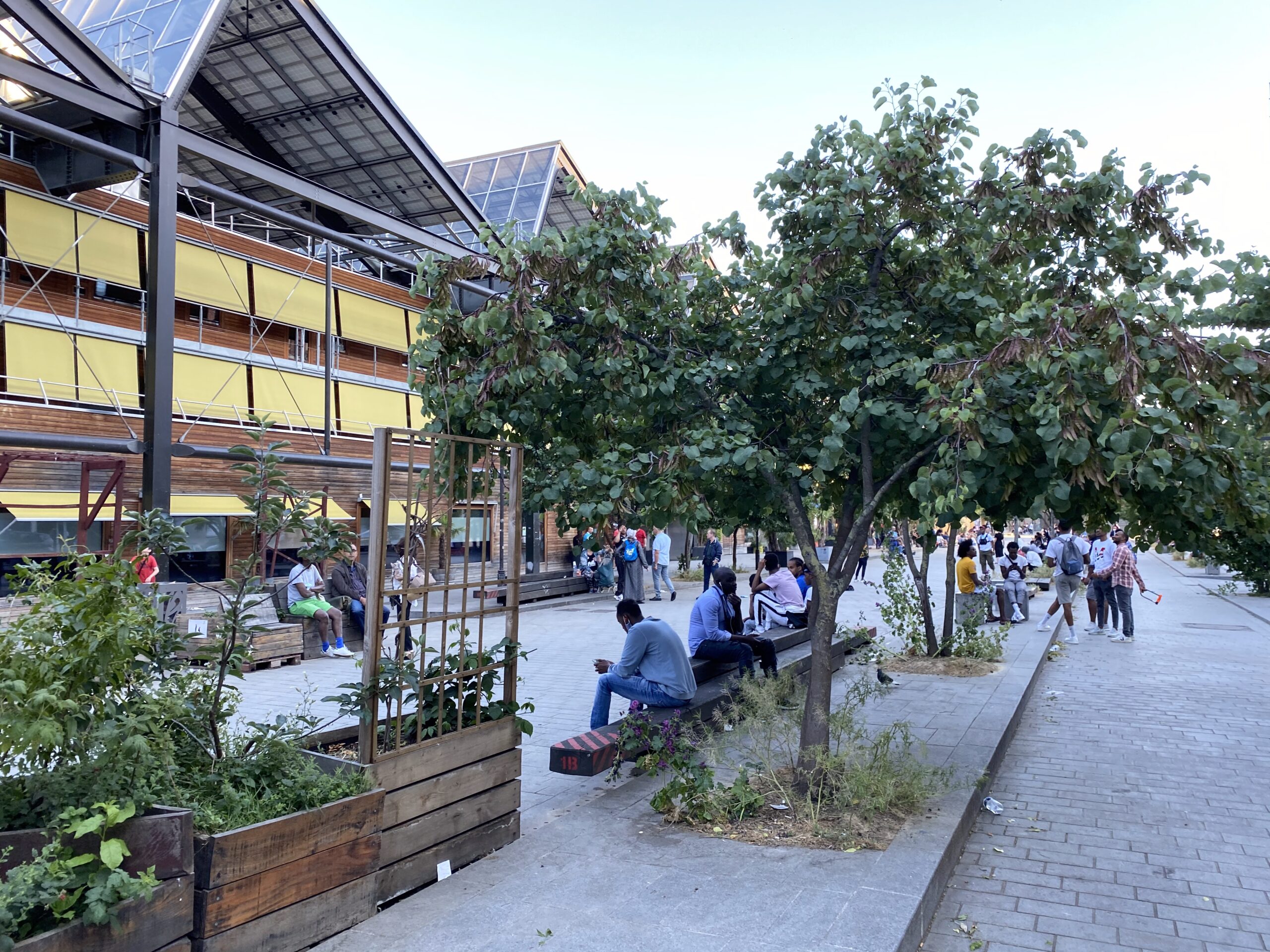
The framework of green infrastructure could also help us think beyond an anthropocentric definition of public spaces and toward a concern for non-human geographies. The rail infrastructures of 19th century industry, and their usurping by a frenzy for road infrastructure in the mid 20th century, have in many cases left cities marked by disused train lines. Paris’ Petite ceinture is one such example, a loop of rail track circling the city, just within the Boulevard Périphérique that follows what was once the city walls. Sunk below the street in deep cuttings and tunnels, or raised up on viaducts, it transported goods and materials without interfacing with the public realm of the street. After its closure, it remained hidden from public view for a long time, becoming a haven for untended, wild nature and “illicit” forms of life (which, as we will see later, are so often in cohort). Early projects to open the Petite ceinture to public access in the 1990s replicated a “symbolic” mode of urban nature, with picturesque trellises, fountains, and rose gardens to be found on the Promenade plantée of the 12th and 20th arrondissements.
Recently, as this opening up has been extended, its approach has been transformed by urban ecology and its aim to “accommodate and promote non-human mobility, reproduction and even evolution.”⑦ Now, instead of having its overgrowth replaced with ornamental flowers, the Petite ceinture is understood to be a critical infrastructure for animals in their movements between breeding and nesting grounds around the city, part of a network of “green corridors” that form the foreground of the city from the perspective of, say, a hedgehog.⑧ The constituents of urbanism therefore become broader—planners and designers are not only responsible for providing the means for human movement and survival, but protecting and even connecting habitats and corridors for non-humans, who, according to Jonathan Metzger, can express their political “views” by accepting or even refusing to adopt the infrastructures offered to them by humans.⑨ In this way, animals go from happenstance inhabitants of public space to active constituents of the public sphere—the world of public communication, debate, politics, and so on—with a “political voice” and a network of connections of their own.
Urban commons and communal nature
Like infrastructure, the “commons” is an idea put to work in multiple ways—to describe particular kinds of spaces, such as community gardens and allotments, or to argue for a particular kind of politics of shared care and responsibility toward more disparate shared resources such as air, global cultural commons, or even space of the “outer” kind.[11] In this case, though, the commons are not a 20th century invention, but a revival and reframing of the right to use and maintenance, enjoyed by medieval peasants or “commoners” of open land which, like outer space, was not subject to an ownership regime before private enclosure came into the service of capitalist extraction (surely also the immediate future for space). In urban design professions, the commons has unsurprisingly become a crucial rallying cry. It brings with it ideas, or ideals, of shared ownership, cooperation, and the creation of spaces outside of capitalist systems of financial exchange—things many urbanists hope to bring about through their work, despite the challenges posed by serving clients who may not share these aims. The materials they often turn to, in these aims, are plants. Communally tending to plants and benefiting from their fruits—whether in terms of food or the health benefits of being amongst them—is at the center of many projects forwarded under the banner of urban commons. This kind of active engagement in maintenance is at odds with the management of public green spaces, which are tended to by employees of civic authorities, who also own the land on behalf of their citizens. If you tried to start digging up the grass to make new beds for vegetables in a garden square in Paris or London, the way you might in a community garden, you would soon become aware of the difference in regime between “public” and “common” space, with the former maintained professionally to mitigate the damage done by open access.
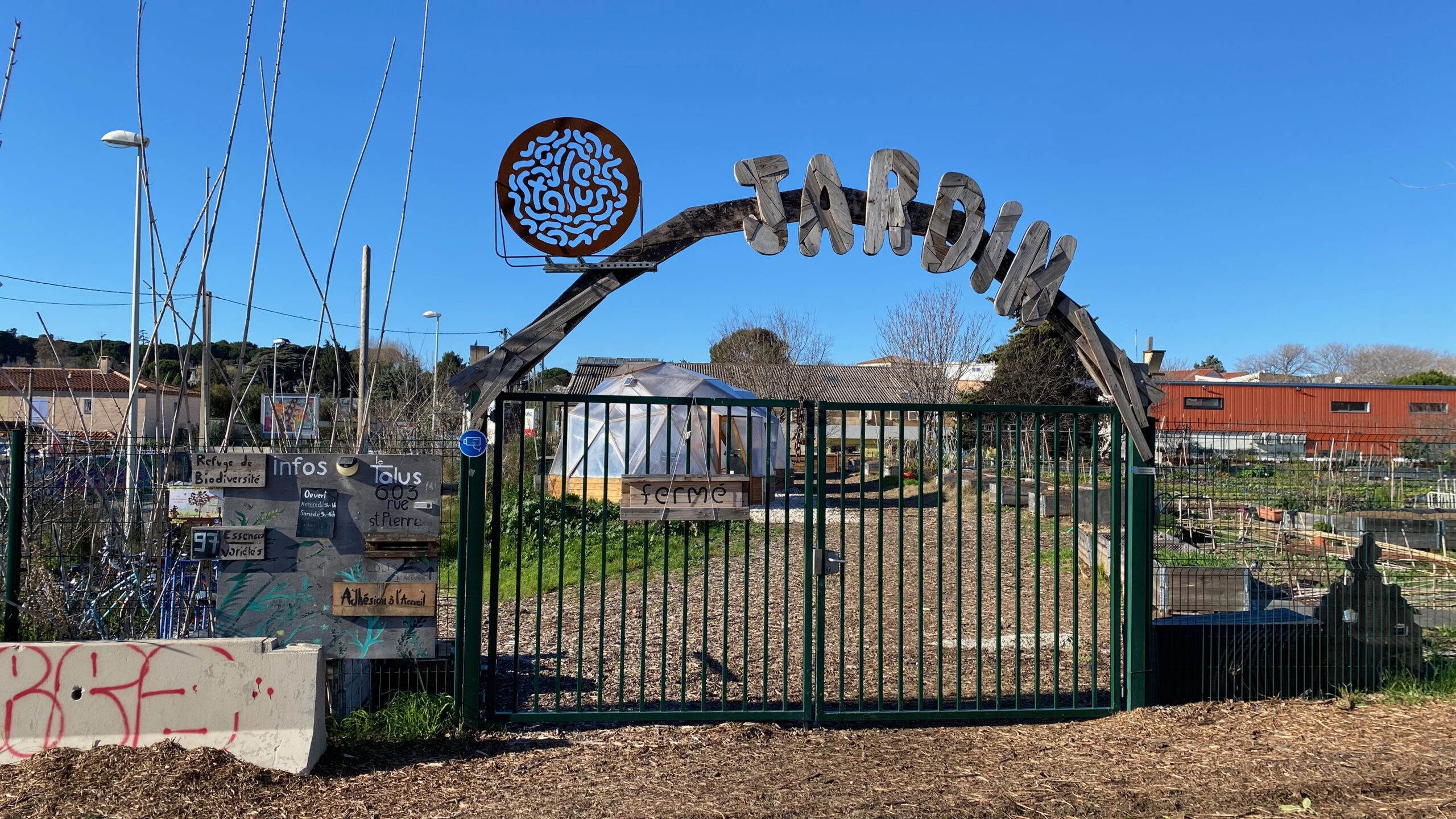
In Paris, communally-maintained green spaces are increasingly popular. However, while some city-owned parks and squares have zones for community gardening, most are “private” initiatives in the sense that they exist on non-public lands (empty building plots, for example), and are operated by associations—non-profit groups akin to charities in the UK, and considered private organizations in France. Just as they are “legally” private, they are often much less accessible than truly public green spaces, which in theory are open to all, without filter, at any time, or at least during daylight hours. Most community gardens limit access to specific times, when trained volunteers can be on hand to welcome visitors, facilitate correct cultivation of vegetables, and ensure compost bins are not polluted with non-biodegradable substances. Outside of these times, many will limit access to key-holding members of the managing association, who have been trained in composting or are experienced in managing their own vegetable patches. These members can be considered analogous to the “commoners” of a village, who held rights of use of the common attached to that settlement. Members of the public might be invited in to look, admire, even learn some gardening, but may not have commoners’ rights to grow plants or pick their fruits there.
So the public and the common are clearly distinct, as legal frameworks for space and as social positions within those spaces. Sometimes, though, they can also be in conflict, as in Aubervilliers, where the “commoners” of the jardins ouvriers (allotments) are fighting to save their gardens—havens for biodiversity and collective food growing in a dense and deprived neighbourhood—from the development of public infrastructures for sport and transport connected to the 2024 Paris Olympics. Even more filtered in access than urban community gardens, allotments in cities like Paris and Marseille tend to put up defenses around resources (food, tools, and so on), keeping out the public world of strangers, whose support cannot be guaranteed in a weigh-up between civic facilities and communal gardens.
As spaces, then, commons carve out intimate settings for belonging and non-commercial exchange against the openness of the democratic public, whose infrastructures are usually conceived by neo-liberal governments to stimulate economic growth and efficiency. The commons are radically alternative models, but also ones that are fragile, both in the face of these economic concerns and even the democratic will of social publics that are excluded from communities of commoners. Of course, many of those engaged in the design of urban commons are conscious of these issues, and are looking to develop models for resource-sharing and community management, using a combination of built and communication infrastructures to connect commons spaces into city-wide systems that can be much more open and resilient.[12] Commons as spaces are not enough for commoning as a process to mount a viable alternative to the neo-liberal vision of the open public realm.


Images

- Carole Barthelemy et al., Petit Atlas d’une Ville-Nature: Jardins Urbains et Cultures Buissonnières à Marseille (Marseille: Wildproject Éditions, 2017), 43. [Note that this and all translations from French to English are by the author]
- Baptiste Lanaspeze, Marseille Ville Sauvage: Essai d’écologie Urbaine, 2nd ed. (Marseille: Actes Sud, 2020).
- Justinien Tribillon and John Bingham-Hall, ‘L’essor de la notion de cultural infrastructure urbaine. Ou quand la « culture » devient un investissement comme un autre’, Journal des anthropologues, no. 162–163 (20 December 2020): 47–64, https://doi.org/10.4000/jda.9933.
- Maan Barua, ‘Infrastructure and Non-Human Life: A Wider Ontology’, Progress in Human Geography 45, no. 6 (1 December 2021): 1469, https://doi.org/10.1177/0309132521991220.
- ‘A Paris, les rêves de « forêts urbaines » se heurtent à la réalité’, Le Monde.fr, 7 July 2021, https://www.lemonde.fr/politique/article/2021/07/07/a-paris-les-reves-de-forets-urbaines-se-heurtent-a-la-realite_6087397_823448.html.
- Kian Goh, Form and Flow: The Spatial Politics of Urban Resilience and Climate Justice (MIT Press, 2021).
- Barua, ‘Infrastructure and Non-Human Life’, 1476.
- Jennifer Foster, ‘Hiding in Plain View: Vacancy and Prospect in Paris’ Petite Ceinture’, Cities, Vacant land: The new urban green?, 40 (1 October 2014): 124–32, https://doi.org/10.1016/j.cities.2013.09.002.
- Jonathan Metzger, ‘Expanding the Subject of Planning: Enacting the Relational Complexities of More-than-Human Urban Common(Er)s’, 2015.
- &beyond and Theatrum Mundi, eds., Sonic Urbanism: The Political Voice, vol. 2 (London: Theatrum Mundi, 2020).
- Cassandra Steer, ‘Global Commons, Cosmic Commons: Implications of Military and Security Uses of Outer Space’, Georgetown Journal of International Affairs 18 (2017): 9.
- John Bingham-Hall, ‘Future of Cities: Commoning and Collective Approaches to Urban Space’, Foresight Future of Cities Project (London: Government Office for Science, 2016).